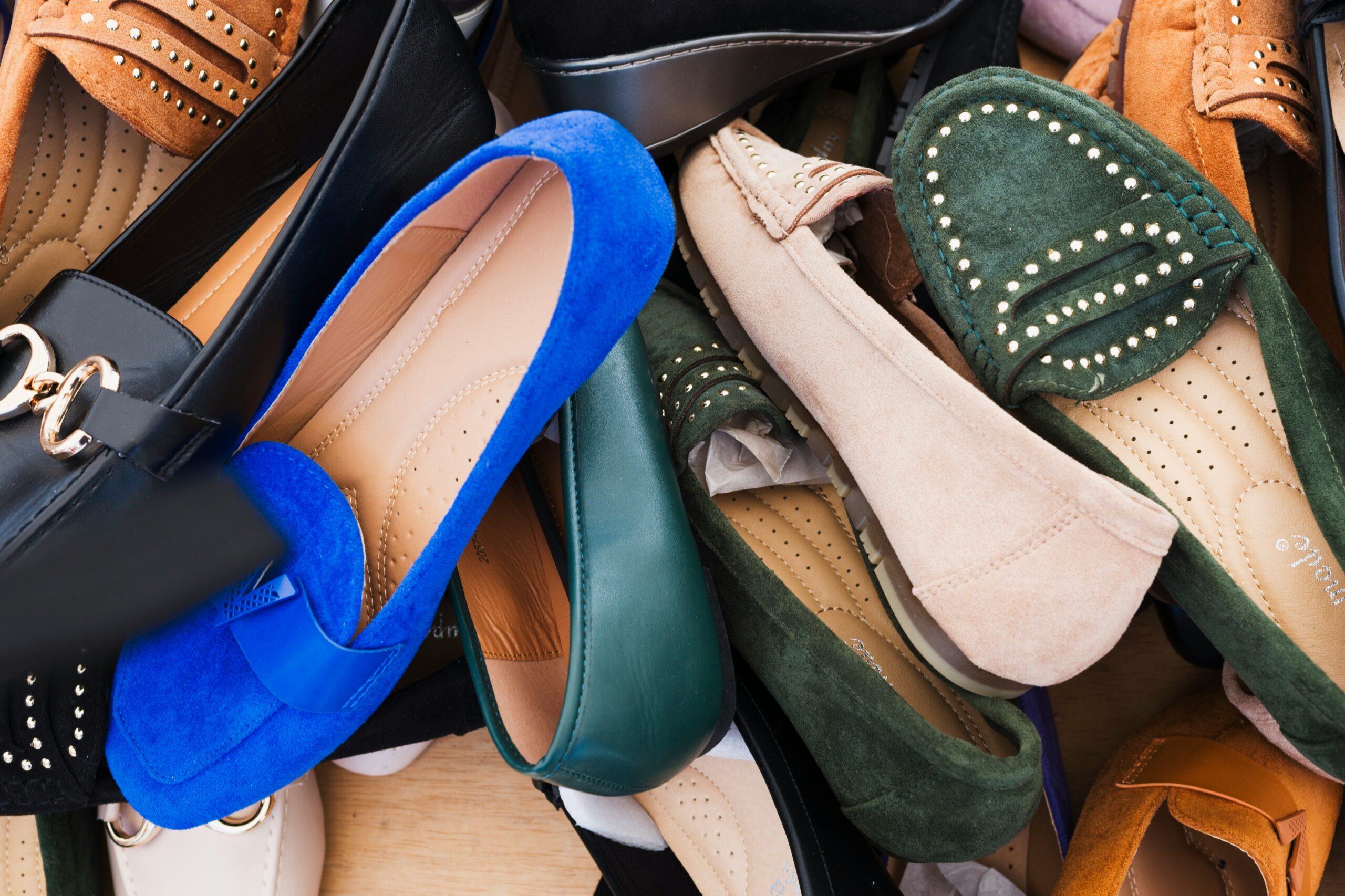
Most consumers think about footwear as a branding category.
They see:
- logos
- colorways
- celebrity endorsements
- aesthetics
- comfort
What they don’t see is the global industrial system underneath.
A modern shoe is rarely made in one place.
Instead, it’s the result of a highly fragmented international supply chain involving:
- leather tanneries in Italy or Brazil
- synthetic component ecosystems in China
- assembly factories in Vietnam
- tooling suppliers across Asia
- design teams in North America or Europe
By the time a pair of shoes reaches a customer, it may have crossed multiple borders and passed through dozens of suppliers, subcontractors, and manufacturing stages.
And that complexity is exactly what makes footwear one of the most operationally difficult industries in consumer products.
The Myth of the “Made In” Label
One of the biggest misconceptions in footwear is the idea that a shoe is “made” in a single country.
In reality, most footwear is assembled in one location but built from components sourced globally.
A shoe labeled “Made in Vietnam” may include:
- leather from Brazil
- engineered mesh from China
- midsoles produced elsewhere in Asia
- adhesives from specialized chemical suppliers
- tooling from another regional cluster entirely
Operationally, footwear is less like a single manufacturing process and more like a globally distributed orchestration problem.
That matters because every handoff introduces:
- lead time risk
- quality variability
- freight complexity
- communication challenges
- inventory exposure
And unlike many consumer categories, footwear has very little room for error.
A sizing issue, bonding issue, or comfort problem can permanently lose a customer.
Why Asia Became the Center of Footwear Manufacturing
Most people assume footwear manufacturing moved to Asia purely because of cheap labor.
That explanation is incomplete.
Yes, labor mattered initially. Footwear is still an extremely labor-intensive product category. A single pair of shoes may pass through 30–60 pairs of hands before reaching the customer.
But over time, Asia developed something much more important:
manufacturing ecosystems.
Countries like China and Vietnam didn’t just become lower-cost assembly hubs. They developed dense regional networks of:
- material suppliers
- mold makers
- stitching operations
- foam producers
- chemical suppliers
- outsole manufacturers
- tooling specialists
- logistics infrastructure
- skilled labor pools
That density creates compounding operational advantages.
Instead of shipping components across continents, many suppliers are located within hours — or even minutes — of each other.
In footwear, proximity matters because development is highly iterative.
If a prototype fails:
- the last may need adjustment
- the upper pattern may need modification
- the foam density may need tuning
- stitching tolerances may need refinement
When those suppliers exist inside the same regional ecosystem, iteration happens dramatically faster.
China: The World’s Component Engine
China remains one of the most important countries in global footwear, even when final assembly happens elsewhere.
That’s because China dominates many of the upstream component ecosystems that modern footwear depends on.
Many performance materials still originate there, including:
- synthetic uppers
- engineered knit fabrics
- adhesive systems
- technical foams
- TPU components
- trims and accessories
Even brands manufacturing in Vietnam often remain heavily dependent on Chinese suppliers for critical inputs.
This creates an important distinction:
Vietnam may assemble the shoe.
But China often powers the material ecosystem underneath it.
That’s part of why reshoring footwear production has proven so difficult.
You’re not just replacing a factory.
You’re replacing an interconnected industrial ecosystem that took decades to build.
Vietnam: The Assembly Powerhouse
Vietnam has become one of the most important footwear manufacturing hubs in the world.
Large global brands rely heavily on Vietnamese factories because the country has developed:
- highly specialized labor
- scalable manufacturing capacity
- strong export infrastructure
- sophisticated factory operations
Vietnam excels particularly in:
- athletic footwear
- performance footwear
- large-scale assembly
- high-volume production runs
But Vietnam’s rise also reflects a broader truth about footwear manufacturing:
scale alone is not enough.
Factories need deep technical expertise around:
- lasting
- pattern engineering
- bonding
- stitching
- quality consistency
- fit execution
That knowledge compounds over decades.
And because footwear manufacturing remains so manual, experience matters enormously.
Even today, many footwear operations still rely heavily on skilled workers making judgment calls throughout production.
Italy: Luxury, Leather, and Process Knowledge
If Vietnam and China dominate scale, Italy dominates craftsmanship and premium leather footwear.
Italy’s importance in footwear goes far beyond aesthetics.
Its competitive advantage comes from generations of accumulated process knowledge around:
- leather tanning
- pattern engineering
- luxury finishing
- material handling
- premium construction methods
In luxury footwear, the tannery relationship itself can become strategically important.
Leather quality affects:
- softness
- flexibility
- durability
- break-in behavior
- consistency across production runs
And unlike many synthetic materials, leather is highly variable by nature.
The climate, animal source, tanning chemistry, and finishing process all impact the final material properties.
That’s why premium brands often maintain extremely close relationships with specific tanneries.
In many ways, Italy exports expertise as much as it exports shoes.
Brazil: The Vertically Integrated Leather Giant
Brazil occupies a unique role in the footwear industry.
It is simultaneously:
- one of the world’s largest leather producers
- a major footwear manufacturing base
- a massive domestic consumer market
Because of its cattle industry, Brazil developed deep expertise in leather production and tanning.
The country has become especially strong in:
- sandals
- casual footwear
- leather footwear
- summer textiles and raffia materials
Unlike some export-focused Asian manufacturing hubs, Brazil also benefits from a very large internal market.
That creates a different operational dynamic.
Many Brazilian manufacturers aren’t solely dependent on international buyers because domestic demand itself is substantial.
At the same time, Brazil’s footwear ecosystem has become increasingly important as brands diversify supply chains following COVID-era disruptions.
Many companies discovered during the pandemic that relying too heavily on a single manufacturing geography created enormous operational risk.
As a result, nearshoring and regional diversification have become much larger strategic priorities.
Why Footwear Is So Hard To Reshore
Every few years, someone asks the same question:
“Why don’t footwear brands just manufacture everything in America?”
The answer is much more complicated than labor costs.
The real challenge is ecosystem density.
Modern footwear manufacturing depends on:
- last makers
- outsole suppliers
- chemical systems
- stitching operations
- material labs
- mold tooling
- grading specialists
- tanneries
- testing facilities
In many Asian footwear clusters, these suppliers exist within tight geographic proximity.
That proximity dramatically accelerates:
- prototyping
- troubleshooting
- iteration
- quality control
- production speed
Rebuilding that ecosystem elsewhere would require:
- enormous capital investment
- decades of supplier development
- workforce specialization
- infrastructure coordination
And because footwear margins are already pressured by:
- returns
- inventory fragmentation
- markdowns
- freight
- customer acquisition costs
…the economics become even harder.
Footwear Is Really a Systems Industry
The deeper you go into footwear, the clearer one thing becomes:
This is not simply a fashion business.
It’s a systems business.
Every shoe represents the coordination of:
- material science
- biomechanics
- manufacturing engineering
- global logistics
- inventory forecasting
- consumer psychology
And the consumer only sees the final product for a few seconds before deciding whether to buy it.
That disconnect between invisible operational complexity and visible consumer simplicity is what makes footwear such a fascinating category.
Because underneath every pair of shoes is one of the most sophisticated supply chains in consumer products.