Built for efficiency, durability, and scale.
Tablet supplement manufacturing offers advantages in cost, shelf life, and high-volume scalability, but it introduces its own set of technical constraints. Compression force, tooling quality, excipient selection, and dissolution performance all directly affect product integrity and consumer experience.
Unlike capsules, tablets require precise mechanical control. Small deviations in formulation or equipment setup can lead to cracking, capping, or failed dissolution, especially as volumes increase.
What Falls Under Tablet Supplements Manufacturing
This category includes supplements produced through compression and coating processes.
Common product types include:
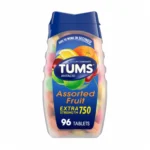


Tablet complexity varies widely based on ingredient hardness, taste profile, and intended release characteristics.
How Tablets Supplements Are Manufactured
Most tablet supplements follow a structured production flow:
Ingredient milling and blending
Raw materials are milled and blended to achieve uniform particle size and distribution.
Excipient and binder integration
Binders, lubricants, and disintegrants are added to ensure compressibility and dissolution.
Tooling and die setup
Custom tooling defines tablet shape, size, and tolerances.
Compression
Powder blends are compressed under controlled force to form tablets.
Coating (if applicable)
Film or functional coatings are applied for taste, protection, or release control.
QC and packaging
Hardness, friability, and dissolution are tested before final packaging.
Each step involves tradeoffs between speed, yield, and performance.
Key Manufacturing Decisions Founders Need to Make
Tablet manufacturing decisions affect both cost and product performance.
Determines tablet strength, disintegration, and mouthfeel.
Too much force causes slow dissolution; too little causes breakage.
Poor tooling leads to weight variation and surface defects.
Impacts taste masking, stability, and release profile.
Affects swallowability and consumer compliance.
Clarity here prevents downstream reformulation and delays.
Common Challenges in Tablet Production
Tablet issues often appear during scale-up, not sampling.
Common risks include:
- Capping or lamination during compression
- Inconsistent hardness across batches
- Failed dissolution testing
- Excessive tool wear
- Taste issues in chewable tablets
Most failures trace back to insufficient process validation.
How Sourcify Supports Tablet Supplement Manufacturing
Sourcify acts as your sourcing and execution partner — not a quoting service.
For tablet supplements, we help brands by:
- Vetting compression-capable GMP facilities
- Reviewing formulations for compressibility and scale risk
- Advising on tooling and coating tradeoffs
- Managing sampling, revisions, and timelines
- Ensuring QC testing aligns with regulatory expectations
Who This Is Best For
Tablet manufacturing through Sourcify is ideal for:
- High-volume supplement lines
- Cost-sensitive SKUs
- Chewable or coated tablet products
- Brands prioritizing long shelf life
Ready to Get Started?
If you’re evaluating tablet supplement manufacturing and want experienced guidance, we’re here to help.