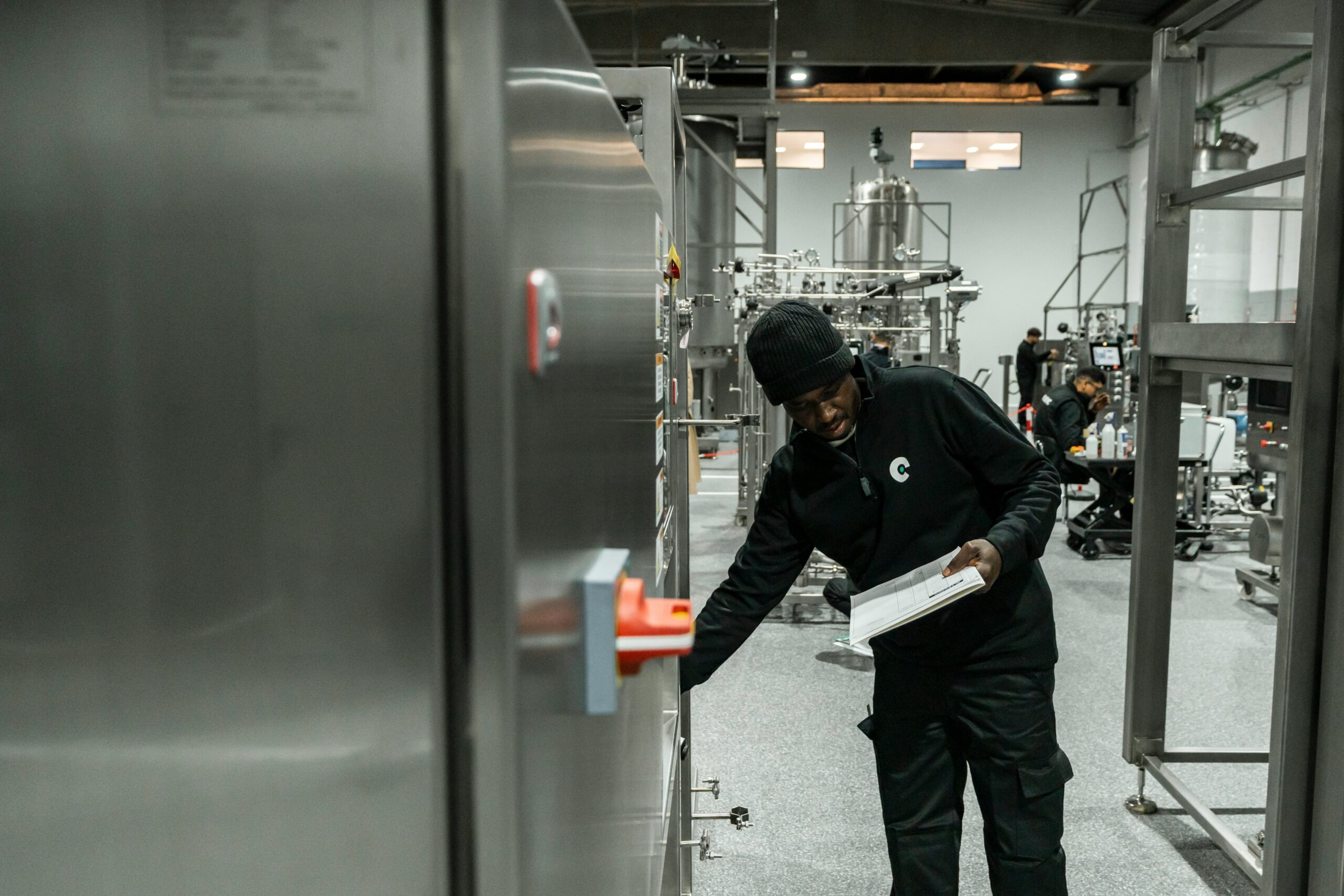
Scaling a supplement brand is hard. Scaling without losing batch consistency is harder.
Early production runs often look clean. Small volumes. Tight oversight. Direct communication with the factory. But once order sizes increase, production speeds up, and timelines tighten, small formulation or process weaknesses turn into real problems — failed COAs, flavor drift, customer complaints, and margin erosion.
Consistency doesn’t break overnight. It breaks gradually, then all at once.
Here’s what founders need to understand about scaling supplement manufacturing without sacrificing quality.
Why Batch Consistency Fails During Scale
Consistency problems usually don’t come from bad intentions. They come from process stress.
When you scale, several things change at once:
- Larger raw material purchases
- Faster production speeds
- Longer production runs
- New operators or shifts
- Ingredient lot changes
- Different equipment or lines
A formula that worked at 25,000 units may behave very differently at 250,000.
The most common failure points during scale include:
- Potency variation between batches
- Flavor or texture inconsistency
- Fill weight drift
- Stability degradation
- Appearance changes (color, clarity, texture)
These are operational issues — not marketing issues.
The Real Causes of Inconsistency
1. Raw Material Variability
Not all ingredients behave the same across lots.
Botanicals vary by harvest. Proteins vary by source. Oils oxidize at different rates. Even excipients can perform differently.
If your manufacturer doesn’t tightly control incoming ingredient testing and supplier qualification, batch variation becomes inevitable.
2. Blend Uniformity Breakdowns (Capsules & Powders)
As batch sizes grow, blend uniformity becomes harder to maintain.
Differences in:
- Particle size
- Ingredient density
- Static behavior
- Hygroscopic properties
can lead to ingredient segregation during long production runs.
Uniformity that passed in small-scale testing may fail under extended blending or transport.
3. Compression & Encapsulation Drift
For tablets and capsules, scaling increases equipment stress.
Higher speeds can cause:
- Inconsistent fill weights
- Capping or lamination (tablets)
- Capsule separation
- Tooling wear
Precision at low speed doesn’t guarantee precision at high speed.
4. Heat & Stability Stress (Gummies & Liquids)
Gummies and liquids are especially sensitive to scale.
Longer cook times or higher volumes may affect:
- Active degradation
- Texture changes
- Moisture levels
- Microbial stability
Small process deviations multiply during extended production.
5. Operator & Shift Changes
When scaling, factories often add shifts.
New operators may:
- Adjust equipment differently
- Interpret SOPs inconsistently
- Move faster to meet output targets
If documentation and controls aren’t tight, variability creeps in.
How Strong Manufacturers Protect Consistency
The difference between “it usually works” and reliable scale is process control.
Here’s what to look for.
Tight Incoming Ingredient Controls
- Identity testing on every lot
- Potency verification
- Supplier qualification protocols
- Clear COA validation
Ingredient discipline is non-negotiable.
Validated Blending Protocols
- Defined blend times
- Particle size standardization
- In-process sampling
- Segregation mitigation strategies
Blending should be engineered — not assumed.
In-Process Quality Checks
Strong manufacturers don’t wait for final testing.
They monitor:
- Fill weights
- Compression force
- Hardness
- Moisture levels
- pH (liquids)
- Texture (gummies)
Quality should be tracked during the run, not just at the end.
Stability Data That Reflects Scale
Shelf life should be based on:
- Real-time testing
- Accelerated stability testing
- Packaging compatibility validation
Not theoretical projections.
Format-Specific Scaling Risks
Capsules
- Blend segregation during long runs
- Capsule shell sourcing inconsistency
- Moisture absorption in humid environments
Tablets
- Tooling wear over extended production
- Compression drift
- Coating uniformity issues
Powders
- Ingredient separation during filling
- Flavor inconsistencies
- Static interference at high speeds
Liquids
- Microbial control breakdown
- Separation over time
- Preservative system stress
Gummies
- Heat exposure degrading actives
- Texture inconsistency
- Melting in transport
Softgels
- Oxidation during longer production runs
- Shell brittleness
- Leakage under temperature variation
When to Add a Second Manufacturer
At a certain point, scale increases supply chain risk.
Founders often wait too long to diversify.
Consider a secondary manufacturer when:
- Production runs exceed comfort capacity
- Lead times stretch unpredictably
- You’re dependent on one geographic region
- Volume growth outpaces equipment limits
Dual sourcing isn’t just about cost. It’s about continuity.
What Founders Should Audit Before Scaling
Before increasing order volume, review:
- Has the formula been validated at target batch size?
- Are ingredient suppliers locked and qualified?
- Are SOPs documented and repeatable?
- Is equipment capable of higher-speed production?
- Is QC sampling frequency sufficient?
- Are stability projections backed by data?
If these answers aren’t clear, scaling will introduce risk.
How Sourcify Helps Brands Scale Cleanly
Scaling supplement manufacturing requires operational fluency — not just introductions.
Sourcify supports scaling brands by:
- Vetting factories for true GMP execution, not surface-level claims
- Reviewing formulations for scale readiness
- Evaluating equipment capability and production limits
- Monitoring QC standards during batch increases
- Identifying backup suppliers before risk escalates
- Guiding MOQ and volume planning decisions
Our role is to prevent batch inconsistency before it damages brand trust.
The Bottom Line
Consistency is what builds repeat customers.
Scaling without process control erodes trust — quietly at first, then publicly.
The brands that scale successfully don’t rely on luck.
They rely on disciplined sourcing, structured oversight, and manufacturers built for precision — not just output.
If you’re preparing to scale supplement manufacturing and want to protect batch integrity from day one, experienced guidance makes the difference.
Talk to a supplement sourcing expert