Since he graduated college in the ‘90s, Aaron Krause had...
Read MoreHome & Kitchen Products Manufacturing
Build durable, food-safe Home & Kitchen products with vetted manufacturers, reliable materials, and expert sourcing support from concept to production.
How Sourcify Supports Your Home & Kitchen Sourcing
We’re your operational partner — connecting you to vetted manufacturers and ensuring your products meet food-contact, durability, and finish-quality standards.
Vetted Home & Kitchen Factories
We identify suppliers with proven capability in metals, plastics, silicone, ceramics, and glass — with strong safety and finishing controls.
Food-Contact Compliance Expertise
We help you navigate FDA, LFGB, and Prop 65 requirements to ensure materials and coatings are safe.
Structured QA & Testing Oversight
From migration testing to coating adhesion and thermal resistance, we ensure consistent quality at every stage.
Multi-Country Manufacturing Options
We match each product type with the best region for materials, cost, and finishing capability.
End-to-End Production Support
Quotes, samples, tooling, QC, and issue resolution handled by a team that’s been inside these factories.
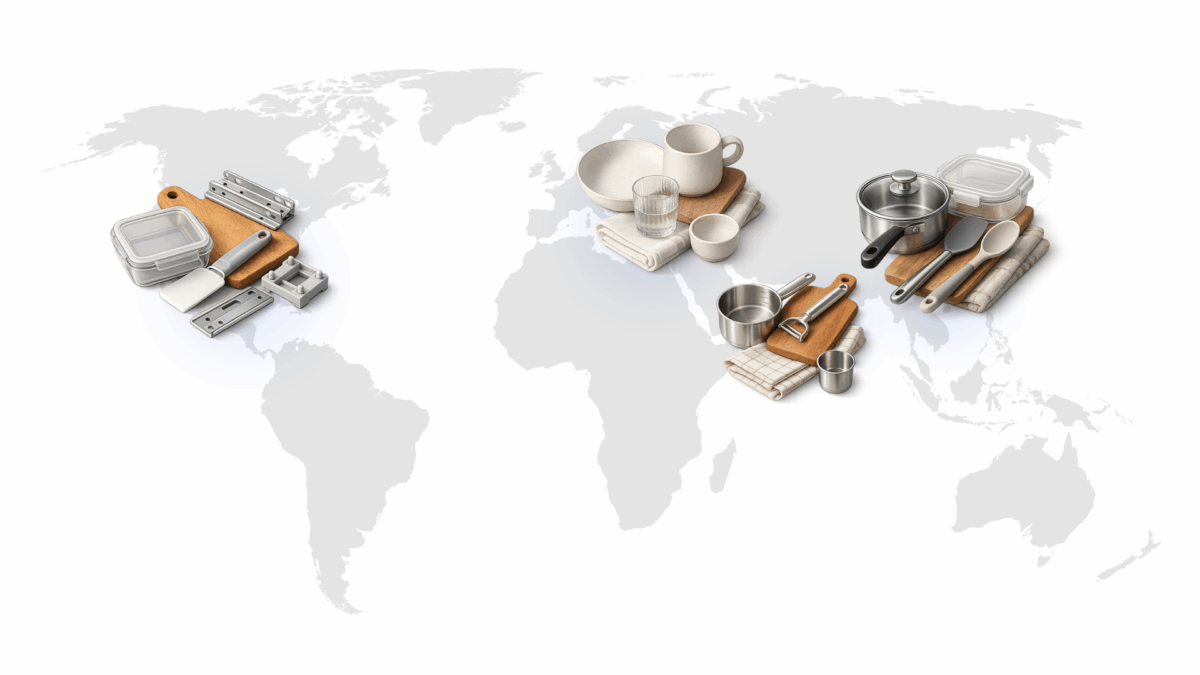
Best Countries for Manufacturing Home & Kitchen Products
China
India
Vietnam
Turkey
Mexico
China
Ideal For:
Cookware, utensils, silicone tools, tableware, storage containers.
Cost Snapshot: Medium
Lead Times: 60–120 days
India
Ideal For:
Stainless steel cookware, prep tools, cutting boards, kitchen textiles.
Cost Snapshot: Low–Medium
Lead Times: 60–120 days
Vietnam
Ideal For:
Utensils, storage containers, bamboo boards, kitchen textiles.
Cost Snapshot: Low–Medium
Lead Times: 75–120 days
Turkey
Ideal For:
Stoneware, glassware, mugs, kitchen textiles.
Cost Snapshot: Medium–High
Lead Times: 45–90 days
Mexico
Ideal For:
Food containers, cutting boards, simple tools, metal subassemblies.
Cost Snapshot: Medium
Lead Times: 30–60 days
Ready to Build Your Home & Kitchen Product Line?
Get matched with a vetted supplier and move from idea to production with confidence.
Home & Kitchen Product Types We Support
From cookware to storage solutions, we connect you with manufacturers experienced in food-contact materials, precision tooling, finishing processes, and safe home goods production.
Cookware & Bakeware
Stainless steel, carbon steel, cast iron, aluminum, and non-stick cookware built with consistent heat distribution, safe coatings, and reliable construction.
Utensils & Tools
Spatulas, ladles, skimmers, peelers, presses, and silicone tools engineered to meet food-contact safety and withstand high-temperature use.
Food Storage & Containers
Glass, stainless steel, silicone, and high-quality plastics designed for safe food contact, leak-proof seals, and long-term durability.
Tableware & Dinnerware
Ceramics, porcelain, stoneware, glassware, and cutlery produced with food-safe glazes, controlled thickness, and premium finishing.
Cutting Boards & Prep Surfaces
Wood, bamboo, composite, and plastic boards manufactured with proper sealing, warp resistance, and hygienic surface finishes.
Home & Kitchen Textiles
Oven mitts, aprons, towels, and padded textiles constructed with heat-resistant linings and strong, consistent stitching.
Manual Kitchen Tools (Non-Electronic)
Graters, choppers, presses, and mechanical prep tools that require precise tolerances, sharpness control, and safe plastics or metal alloys.
Key Manufacturing Risks to Avoid
Home & Kitchen products are regulated for food safety, durability, and coating integrity. These are the risks that most often lead to failures, recalls, and negative customer experiences.
Unsafe or Inconsistent Coatings
Poor-quality non-stick, ceramic, glaze, or paint systems can fail migration tests or peel during use.
Low-Quality Materials or Substitution
Unverified metals, plastics, silicone, or glazes may result in contamination, deformation, or premature wear.
Improper Heat Treatment
Cookware and metal tools can warp or crack without controlled heat treatment and tempering.
Glass & Ceramic Breakage Risks
Inconsistent wall thickness, improper annealing, or poor packaging lead to thermal shock failures and breakage.
Weak Quality Control Systems
No migration testing, coating adhesion checks, or dishwasher resistance tests = inconsistent product safety.
Factories Without Food-Contact Compliance Controls
A supplier unfamiliar with FDA, LFGB, or Prop 65 is not safe for kitchenware manufacturing.
When Brands Seek a New Manufacturer
These are the signals that your current supplier may be limiting your quality, safety, margins, or growth potential.
- Coatings peeling or failing food-contact tests
- Metal warping, discoloration, or oxidation
- Inconsistent glass/ceramic breakage rates
- Incorrect material substitutions or lower-grade finishes
- Missed production deadlines
- Rising defect rates or weak QC
- Sudden price increases or unclear cost structures
- Difficulty scaling SKUs or improving finishes
- Lack of documentation for FDA, LFGB, or Prop 65 compliance
Frequently Asked Questions
Most products require food-contact testing per FDA 21 CFR, EU LFGB, or Prop 65. Glass, ceramics, and coated items must pass migration tests for heavy metals and volatile compounds. Factory documentation and batch traceability are essential.
Stainless steel (304/316), borosilicate glass, BPA-free plastics, food-grade silicone, and certified ceramic glazes are standard. Each material must come from verified suppliers and pass migration testing.
China and India lead in metals and cookware. Vietnam and Mexico excel in plastics and assembly. Turkey is ideal for ceramics and glassware. Each region has unique strengths depending on your SKU.
Inconsistent coatings, improper heat treatment, material substitution, and poor packaging for fragile goods are common issues. Strong QC and vetted suppliers prevent these problems.
Yes. We can diagnose quality issues, analyze cost structures, and either optimize your existing supplier or match you with a more capable factory.
Recent Home & Kitchen Products Blogs
Ready to Build Your Home & Kitchen Product Line?
Get matched with a vetted supplier and move from idea to production with confidence.